The B-52's

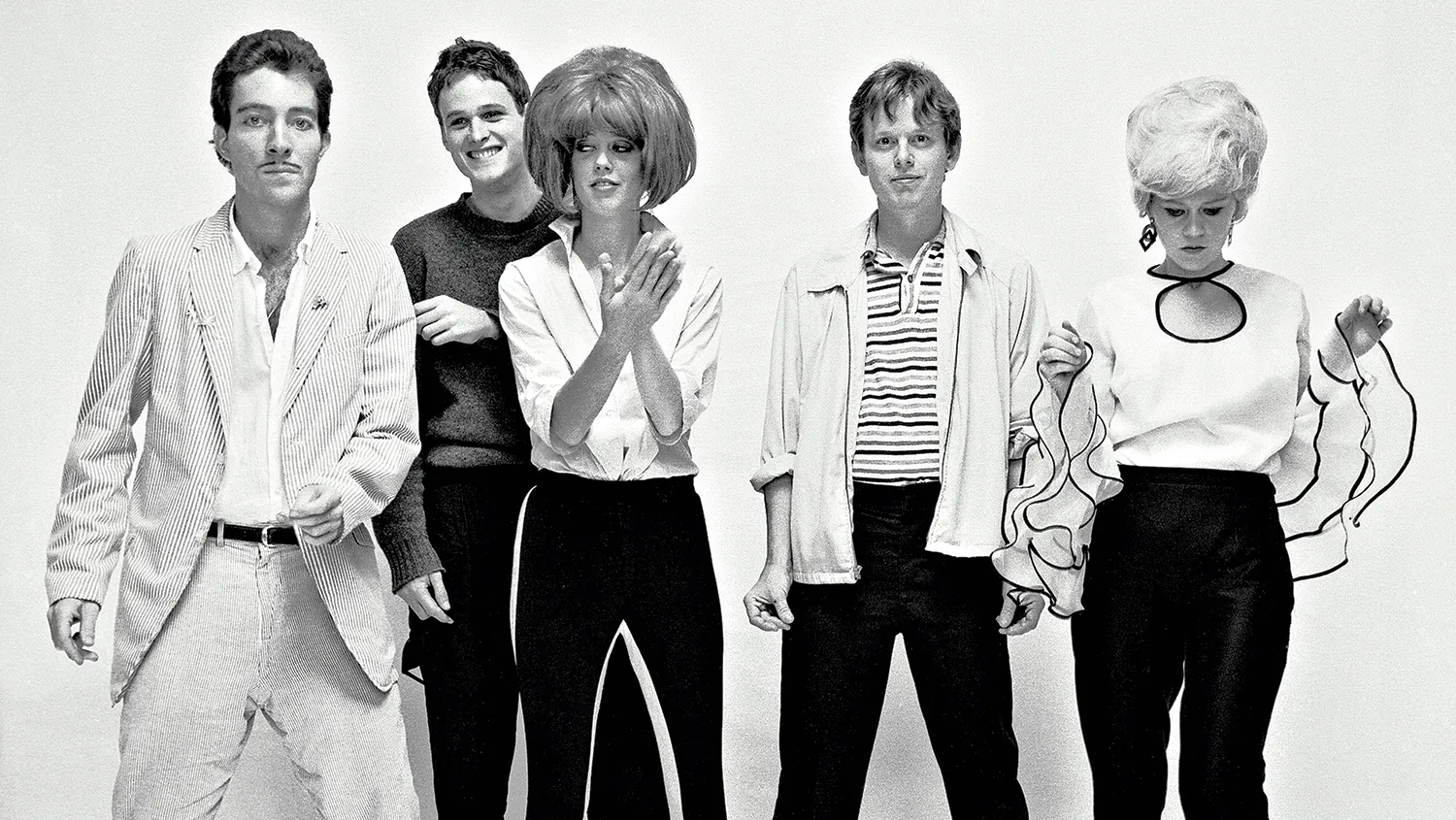
The B-52's promotional photo
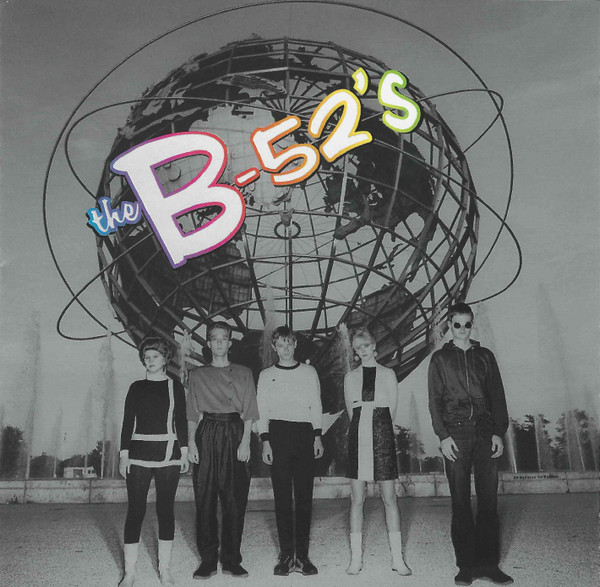
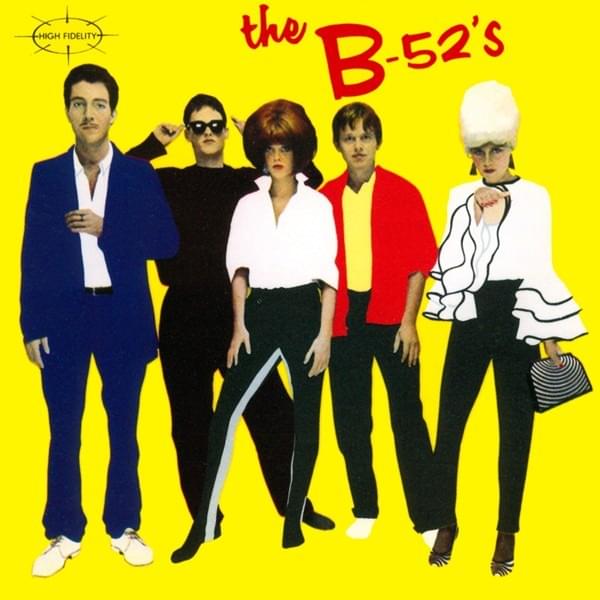
The B-52's cover

The B-52's 1979 ★★★★★

Kitschy ’60s surf-rock, fed through the nervous system of new wave and dressed for a thrift-store luau. Might as well be called one of the defining albums of the era. Nobody else sounded quite like this. Not then. Certainly not now. A huge part of the magic is the vocals. One guy and two girls. Fred Schneider doesn’t really sing, though. He barks, announces, and testifies through these songs like he’s the master of ceremonies at a dance contest sponsored by aliens. Then there are the two girls—Kate Pierson and Cindy Wilson—who harmonize beautifully. Clean, bright, almost too pretty. Until they start shrieking about crustaceans. “Planet Claire” opens the album in a puddle of sci-fi noises and twanging guitar. Fred Schneider strolls through it, yell-singing as though he learned English from drive-in movies and is upset this isn’t how people really talk. “Hero Worship” is a teenage crush set to music, with Cindy Wilson on lead vocals, swinging wildly between sweet and deranged. “Rock Lobster” is surf-rock bent into performance art—featuring, among other things, a sea-creature roll call complete with yips, barks, shrieks, and yodels. Imagine your marine biology teacher having a nervous breakdown. Fantastic debut, and one of the few albums I can put on any day of the week and still be enthralled by. Something I discovered in my early 20s and have listened to constantly ever since. Now I’m in my mid-40s, and I’ll just keep listening—and won’t stop till the afterlife. Don’t care if there’s no rock ’n’ roll in heaven. I’ll smuggle it underneath my robe.
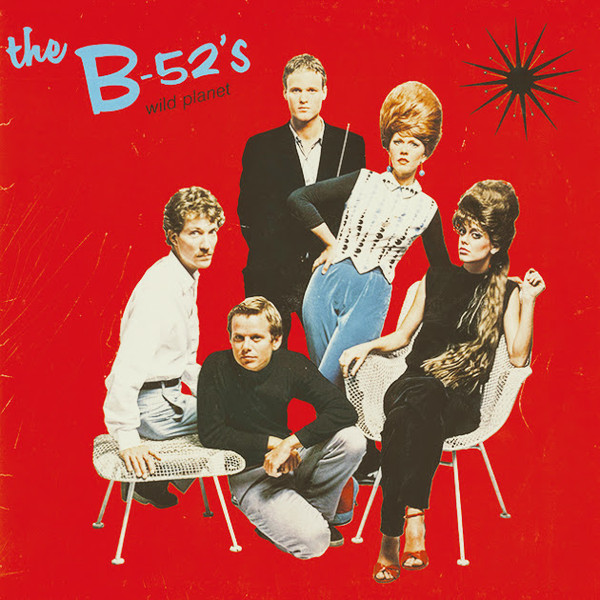
Wild Planet cover

Wild Planet 1980 ★★★★½

The B-52’s follow-up is also chock-full of wacky party songs, and it is wonderful, even if it’s slightly, and I mean on a microscopic level, less colorful than the debut. That said, the songwriting has sharpened a mite. The songs feel more refined and sturdy. The trade-off: a slight loss of that wild, inspired spontaneity. The energy’s a little different now. Not so much alien-invasion weirdness. More eccentric couple down the street who dress like it’s 1967 and keep showing up at your door trying to give you pineapple upside down cakes. The production changed too. More polished now. More recognizably ’80s—sleeker keyboards, crisp bass, less of that raw surf-rock bite from the debut. “Private Idaho” is a great party song, with an attractive groove and an infectious melody. Kate Pierson’s whooping noises at the beginning once again a reminder that these people were silly to their core. “Give Me Back My Man” has one of the tightest grooves known to mankind, plus a fantastic vocal performance from Cindy Wilson—desperate, funny, wounded, and still prepared to seize control of a jukebox at 1:40 in the morning. “Party Out of Bounds” opens the album in full glorious intrusion mode—Schneider and Pierson barging into a party uninvited and causing a ruckus. “Quiche Lorraine” might be the album’s strangest song, which is saying something. Fred Schneider playing a cracked dog owner whose mutt disappears, which he takes personally, and the final corners of his psyche goes along with it. Overall, the album might not hit the euphoria of the debut, but it’s still so wacky and fun that it had might as well constitute lightning striking them twice.

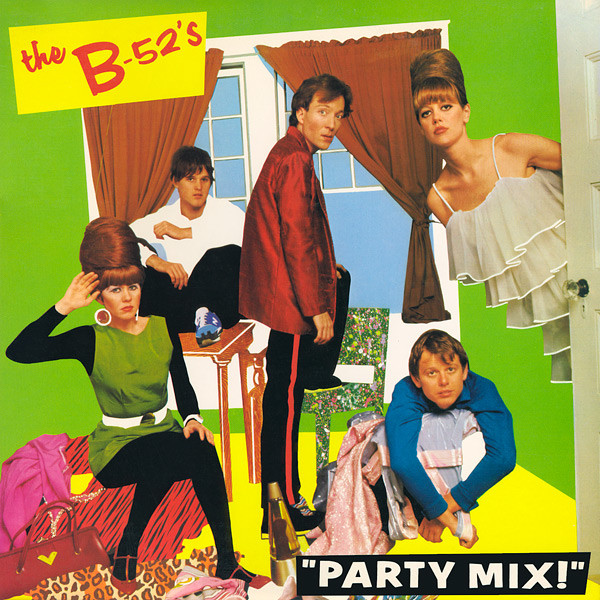
Party Mix! cover

Party Mix! 1981 ★★★½

EP

For the longest time, most of my experience with remixes came from those horrible things tacked onto the ends of my Queen CDs. Awful enough to shut me off the entire concept. Remixes? No thank you. Extended versions? Please leave the building. An entire EP of them? I would rather alphabetize canned goods. But then the B-52’s did one, and suddenly the whole idea starts seeming much less offensive. Party Mix! is exactly what it says it is: familiar B-52’s songs stretched out, goofed up, and handed extra percussion. “Party Out of Bounds” gets extended by a couple minutes and comes armed with a doofy drum-machine rhythm and some frantic bongos. The original is for listening at home with headphones. This version is for dancing at a costume party where at least two people show in character as Frank-N-Furter from Rocky Horror. “Private Idaho” remains great, because “Private Idaho” would probably survive being played through a hotel intercom. “Give Me Back My Man” goes past seven minutes, and you’ll still find that fantastic Cindy Wilson ache underneath all those extraneous beats. “Lava” comes outfitted with heavier sound effects, which seems about right. B-52’s songs are already pop music by way of emergency broadcast from a tiki hut on top of a volcano. Might as well bring more joy to the party. Truth be told, my day is usually better when there’s some B-52’s in it, and these remixes let me enjoy the same wonderful nonsense but from a slightly different angle. Yes, I am going to like this.

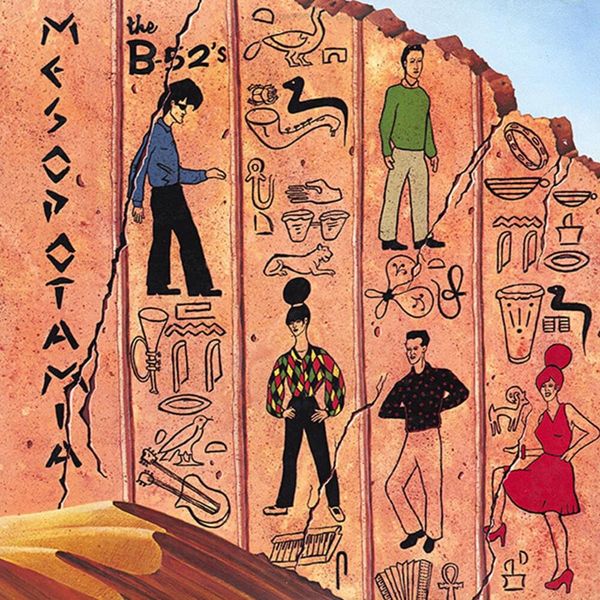
Mesopotamia cover

Mesopotamia 1982 ★★½

EP

The B-52’s had two successful albums under their belt—but those albums were close cousins. So they brought in David Byrne. Presumably hoping the Talking Heads frontman might drag them somewhere stranger and darker—perhaps even dangerous. Certainly someplace new. On paper: a great idea. In practice: small appliance fire. What was initially intended to be a full-length album ended up getting hacked down to this EP—which at least had the decency to cough up one all-time B-52’s classic: the title track. It’s hypnotic and weird, with ancient history turned into dance-floor nonsense. The rest is stiffer. “Deep Sleep” proves why Byrne and the B-52’s weren’t placed on earth to share custody of a recording console. It’s atmospheric and a bit sinister—the sort of thing Byrne might have used to twitch his way through a nervous monologue about civics or soup. But Kate and Cindy are left sounding like polite librarians trapped in a haunted aquarium. “Cake” works better, with a driving rhythm and a bit of the group’s old bounce—though by the end it devolves into Kate and Cindy politely discussing cakes. They were crashing parties on their last album; here, they’re scheming to put Betty Crocker to shame. This EP is still enough for fans, certainly. The title track is essential. But as a bold new direction, Mesopotamia doesn’t really feel like evolution. It feels like they had a bad wig day.

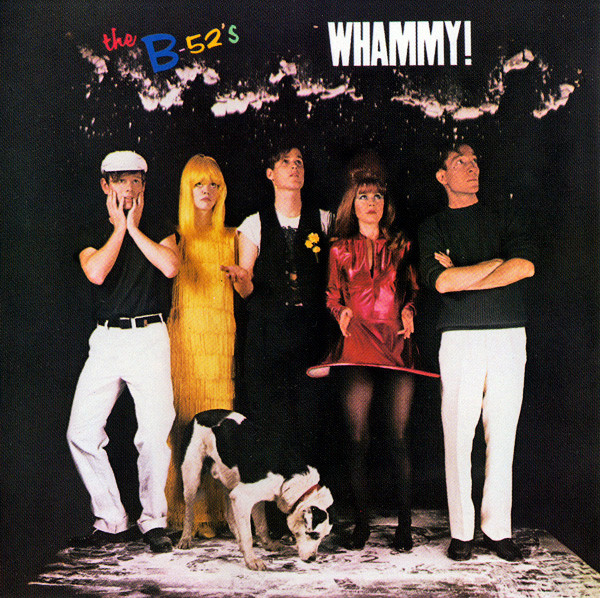
Whammy! cover

Whammy! 1983 ★★★★

After the David Byrne experiment went belly up, the B-52’s tried to get back to basics. Or at least they tried to rebuild those basics through keyboards and drum machines. In other words, the beach-party version of the B-52’s has now been relocated indoors. Times change. Synth-pop happens. And while Whammy! doesn’t have quite the maniacal forward rush of the first two albums, it still rustles up plenty of glorious nonsense. I love it. I listen to this album a lot. “Legal Tender” and “Whammy Kiss” open things with amiable, addictive mid-tempo synth-pop, which is apparently what happens when this band decides to behave itself for several minutes at a time. “Song for a Future Generation” gets stranger—maybe too strange—with each band member reading hammy romantic-connection ads and then chirping about the noble duty of having children. “Butterbean,” one of my favorites, is about—as you might guess—butterbeans. They pick them, hull them, steam them, and immortalize the process in case society forgets one day. Even “Moon 83,” an unnecessary but weirdly welcome rework of “There’s a Moon in the Sky,” fits the synthetic funhouse mood. But the prize is “Big Bird,” essentially a one-chord panic attack with machine-gun synth-bass, fluttering bongos, squawking vocals, and some hot sax blasting through the aviary. It works up a psychotic sweat over one big gray bird hanging around the house and terrorizing everyone. Not their best album, maybe. But it has a prized place in the band’s hall of great, whacked-out pop records.

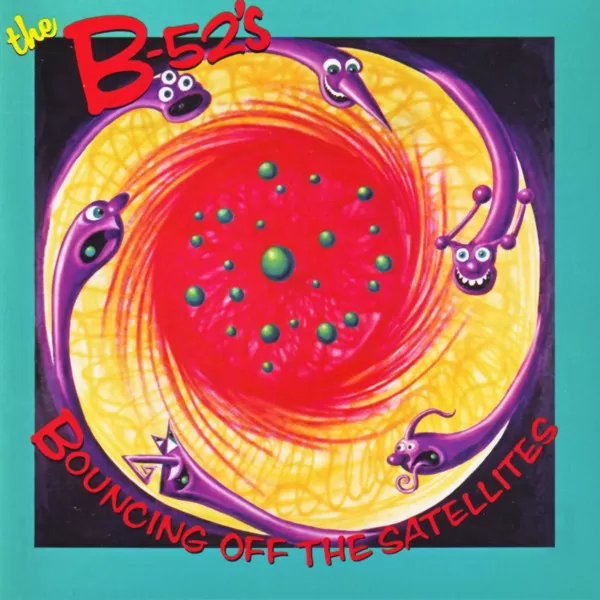
Bouncing Off the Satellites cover

Bouncing Off the Satellites 1986 ★★★½

First things first: this is the sad one. Ricky Wilson died of AIDS shortly after the recording sessions ended. The rest of the band were so shaken by it that they barely promoted the album at all. As a result, Bouncing Off the Satellites more or less slipped past people when it came out. Too bright to sound tragic, too shadowed by real life to feel like plain old party plastic. It also nudges the band much closer to the mainstream, with Tony Mansfield giving everything that shiny mid-’80s lacquer. Which is fine when the B-52’s still come out looking like some mad scientist resurrected them out of a ’50s drive-in sci-fi movie. The bass lines and beats are terrific, the keyboards are a lot of fun, and Cindy Wilson’s belting on “Girl from Ipanema Goes to Greenland” might be one of her great moments—huge, glamorous, and a little radioactive. “Summer of Love” should have been a hit. I don’t know what happened there. Catchy, likable, sunglasses already on, ready for radio. Fred Schneider gets his little psychedelic bus route on “Detour Thru Your Mind,” which is what happens when he’s handed the microphone and left to his own devices. “Ain’t It a Shame” is about as close as they get to a ballad—sweet, mellow, and surprisingly sincere. “Wig” gets nearest to the old B-52’s party-bus-with-no-brakes spirit—this one in particular where all the passengers are required to wear a wig. No question, this is a step down artistically. But it’s also addictive, good-natured, and still has that insatiable B-52’s tang.

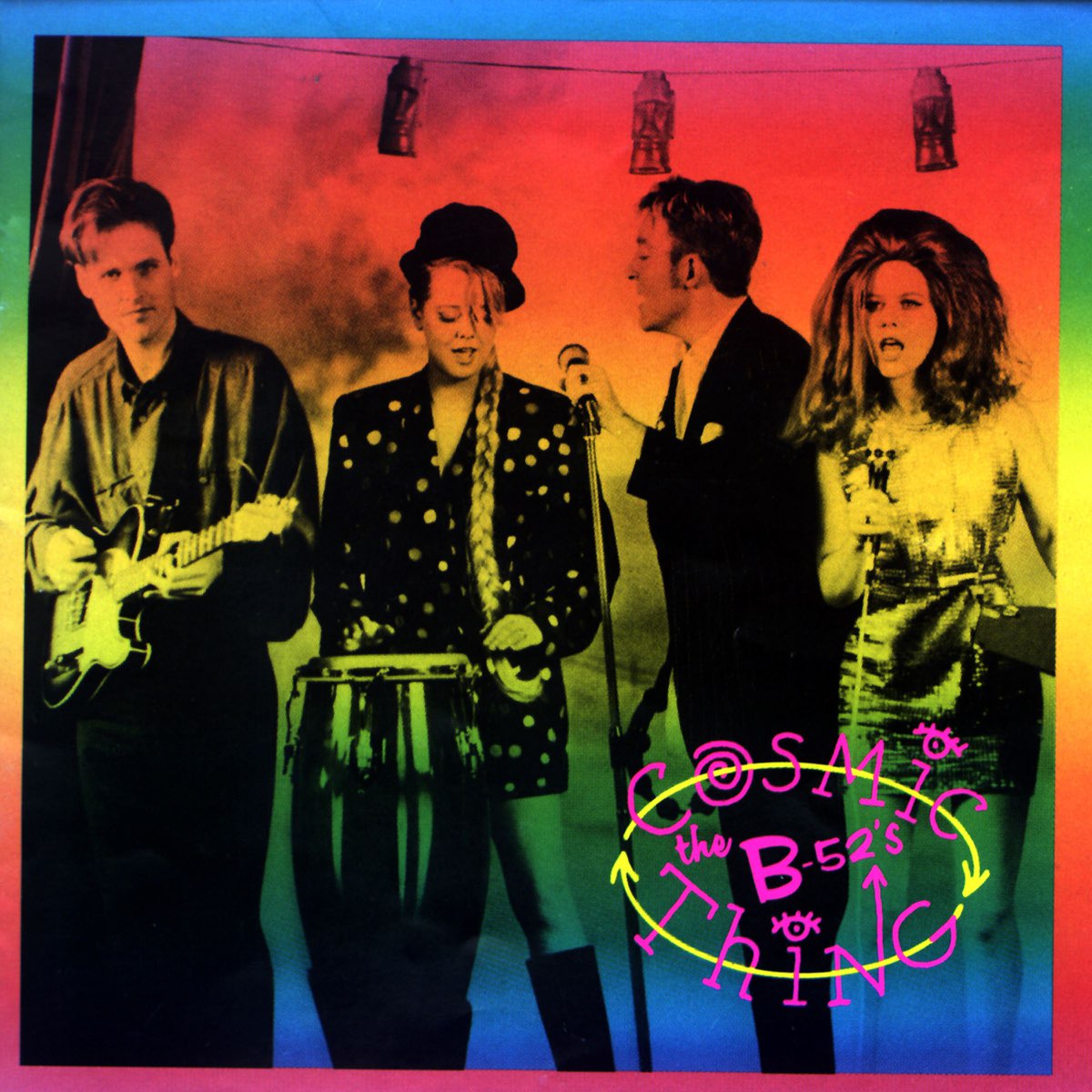
Cosmic Thing cover

Cosmic Thing 1989 ★★★★

Ricky Wilson was gone, tragically, and Keith Strickland had shifted from drums to guitar. The band was now down to four—back and still forging ahead. This also marks the moment when the mainstream path they were traveling down in Bouncing Off the Satellites stops being a path and suddenly becomes a conga line visible from space. Cosmic Thing is about as radio-ready as the B-52’s ever got—which explains why it became their best-selling album, by far. But even though the band got cleaned up here, they didn’t get tamed. They’re still chirping and harmonizing from whatever planet first issued them those outfits. “Love Shack” is the big hit—their only song to conquer the radio. Fred gets to ham it up gloriously in the verses, while Kate and Cindy take over the chorus, and the whole thing becomes a block party. Endearingly irrelevant lyrics, insatiable vocals, a groove too large to fit comfortably inside normal human behavior. Kate and Cindy sound great there, but “Deadbeat Club” gives them the better showcase. The harmonies come through cleaner there—girl-group sweetness routed through a song about slacking. High praise from me. “Channel Z” is another one I love—it has sci-fi energy with the wheels coming loose. Even the slower stuff is pretty great. “Topaz.” “Dry County.” Not over-the-top crazy, but useful when you want to talk your partygoers off the curtains. Not my favorite B-52’s record, but I like the thing. Friendly, catchy, goofy. If someone at the party calls it their favorite, I won’t call security on them.

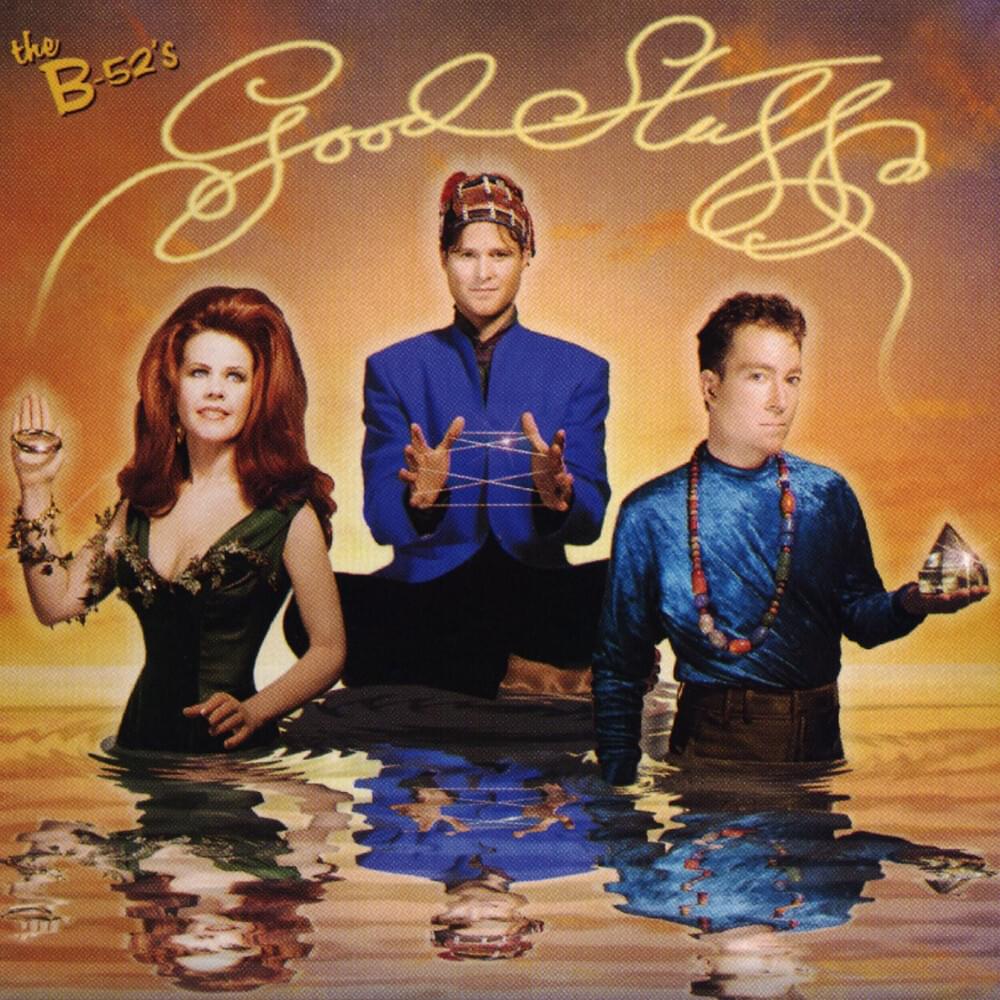
Good Stuff cover

Good Stuff 1992 ★★½

After Cosmic Thing hit commercial gold, the B-52’s understandably tried to make the party strike twice. But it would seem most of their guests were a bit worn out. Good Stuff has no “Love Shack,” no big album sales, and no business stretching itself close to an hour. Trim it down to forty minutes, it might have stayed cute. At nearly sixty, the album repeats itself. The band still has some of that B-52’s tang, thankfully. But Cindy Wilson is missing—having temporarily left for maternity leave—and you feel the absence immediately. Kate is still here, still terrific, but she sounds lonelier without Cindy to bounce against. “Hot Pants” is the song I like most. It’s catchy, silly, danceable, and Fred delivering lyrics about the virtue of this particular pant-wear. “Tell It Like It T-I-Is” opens the album with a crunchy dance groove and enough melody to get exciting. “Is That You Mo-Dean?” comes closest to the old B-52’s glory, with space-age sound effects and an encounter with a UFO while on a store run for hot dogs and wine. But the album runs out of gas. The final stretch—“Vision of a Kiss,” “Breezin’,” “Bad Influence”—gets too long, too clean, too adult-contemporary thwoppy. The B-52’s are still here. You can hear them. But too much of Good Stuff feels like the party’s run out of steam.

Time Capsule: Songs for a Future Generation cover

Time Capsule: Songs for a Future Generation 1998 ★★★★

Compilation

B-52’s are a great example of a band whose entire discography is worth hearing. Don’t just settle for a compilation. But once you do go through all their albums and have consequently been transformed into a raging maniac, this has some worthwhile extras to get your ears on: single versions, alternate mixes, and two brand-new songs. Naturally, the new songs are the main artifacts of interest, and I like them both plenty. They reveal the B-52’s deep, long-suppressed desire to deep dive into chamber folk… OK, just kidding, they’re wacky dance songs. “Debbie” is the better one—not just a Debbie Harry tribute, but a Debbie Harry block party. “Hallucinating Pluto” has funny lyrics, and a title that just reeks of vintage B-52’s, and a nice late-’90s bounce—though it’s the least infectious of the two. Among the alternate mixes here, the one you’ll want to hear is the original mix of “Summer of Love,” which has a rubbery and more pronounced bass rhythm than the much glossier final version. There’s also apparently a different mix of “Mesopotamia” here, though I can’t seem to figure out what’s different about it. Elsewhere, the compilation is stocked with the obvious essentials: “Rock Lobster,” “Love Shack,” “Private Idaho,” “Roam,” and “Channel Z.” As B-52’s compilations go, it’s a strong one. As a fan object, it’s even better—hits, curios, new bait, and proof that this band’s leftovers still know how to flaunt that feathery boa.

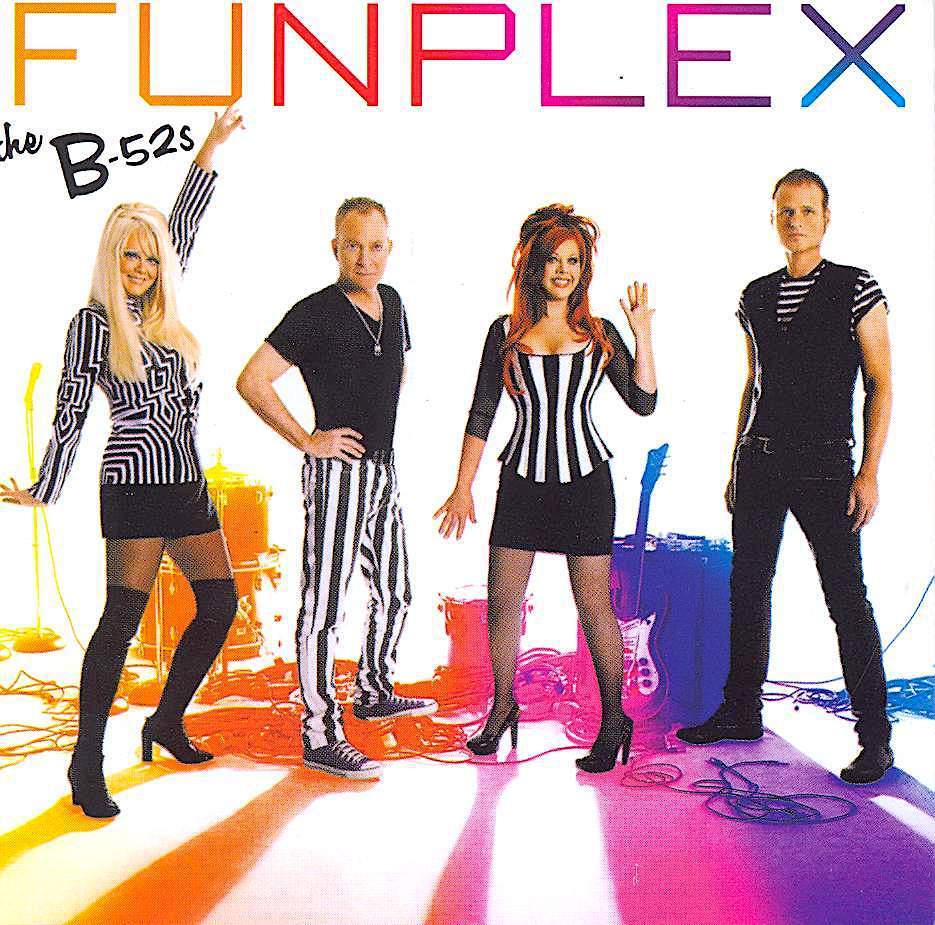
Funplex cover

Funplex 2008 ★★★½

Fourteen years is a long gap between studio albums, especially for a band that could have comfortably spent the rest of its career touring the old hits and wearing out dance floors. The B-52’s certainly didn’t need to come back to the studio. And yet, I’m glad they did. Don’t be so shocked when I tell you it doesn’t quite reach the level of the classic records. The production has a slightly late-2000s polish to it, and the songs aren’t as weirdly shaped as the old ones. “Juliet of the Spirits,” for instance, has the sleek, busy pulse of a new-wave band adjusting itself to modern dance-rock. Fred Schneider’s lost a little of his bark, though the man can still sell a ridiculous line like he’s auctioning off beachfront property on Mars. Kate and Cindy, meanwhile, are still unencumbered when it comes to launching a chorus into orbit. What carries the album are the songs themselves. I caught myself tapping my foot to this at work and enjoying myself. Too much. “Pump,” “Hot Corner,” and the title track are the big winners: energetic, tight, primed for bustin’ moves and wearing party clothes. Sure, the band were “dinosaurs” by this point, but if this is dinosaur behavior, then party on, my prehistoric friends. Turn up that stereo and refuse extinction for another forty minutes.